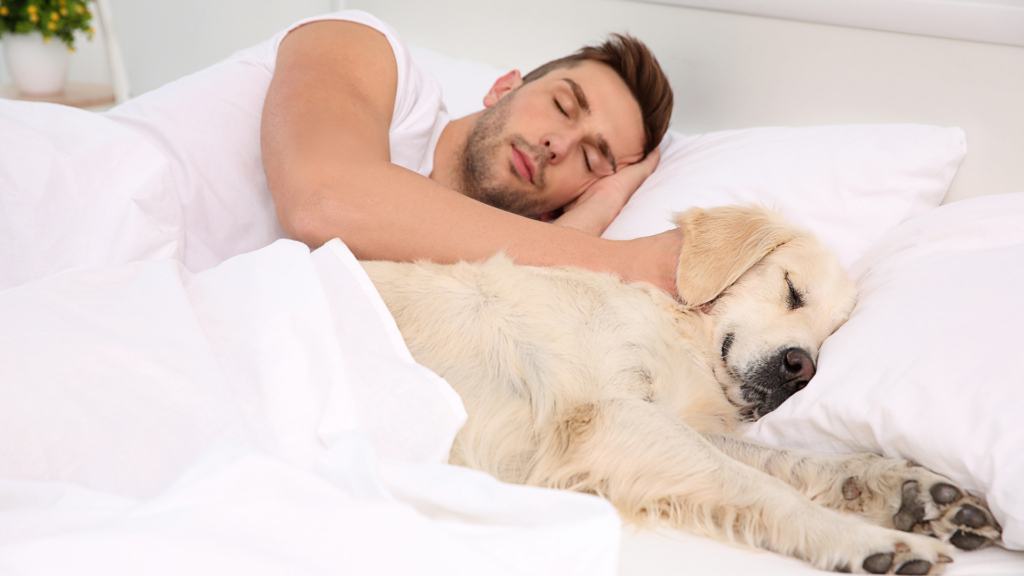
Many dog owners know the feeling of a dog slowly pressing its body weight against their legs while standing nearby.
Some dogs lightly lean for a few seconds, while others fully press themselves into people whenever they get the chance. Large dogs especially seem to love this behavior.
So why do dogs lean on people?
In most cases, dogs lean on humans because of affection, trust, comfort, emotional bonding, and social attachment. Physical closeness helps many dogs feel safe and emotionally connected to the people they trust most.
In this guide, we’ll explore why dogs lean on people, what this behavior means emotionally, and when leaning may signal something deeper.

Dogs Naturally Seek Physical Contact
Dogs are highly social animals that often rely on physical closeness for emotional comfort.
In the wild, close physical positioning helped provide:
- Protection
- Warmth
- Social bonding
- Group connection
Modern dogs still carry many of these instincts, even in domestic environments.
Leaning is often one of the simplest ways dogs maintain physical connection with humans.
Leaning Usually Means Trust
One of the biggest reasons dogs lean on people is emotional trust.
Dogs generally lean against individuals who make them feel:
- Safe
- Comfortable
- Protected
- Emotionally secure
Physical closeness often reflects a strong emotional bond.
Dogs Use Leaning as Affection
For many dogs, leaning is a form of affection.
Dogs cannot hug humans the way people hug each other, so they use physical behaviors like:
- Leaning
- Sitting close
- Resting against legs
- Sleeping nearby
- Placing heads on laps
…to express emotional attachment.
Many owners interpret leaning as a sign of love because it often genuinely reflects emotional closeness.
Is Leaning a Sign of Affection?
In most cases, yes.
Leaning is one of the ways dogs express affection and emotional attachment toward the people they trust.
Since dogs cannot hug people the way humans do, they often communicate affection through physical contact.
Common affectionate behaviors include:
- Leaning against you
- Resting their head on your lap
- Sitting on your feet
- Sleeping beside you
- Following you around the house
Many owners interpret leaning as a sign of love because it often reflects trust, comfort, and a desire for closeness.
Dogs that lean frequently may also display many of the behaviors discussed in our article on why dogs follow you everywhere.
Affectionate Behaviors in Dogs
| Behavior | What It Usually Means |
|---|---|
| Leaning on you | Affection and trust |
| Sitting on your feet | Security and bonding |
| Sleeping next to you | Comfort and attachment |
| Licking your hands | Social bonding |
| Following you | Emotional connection |
Some Dogs Are Naturally More Clingy
Certain dogs crave more physical contact than others.
Highly social breeds often:
- Follow owners constantly
- Lean frequently
- Sit on feet
- Sleep beside humans
- Stay physically close
These “Velcro dogs” usually thrive on companionship and interaction.
Read also: Can Dogs Have Mental Health Issues?
Large Dogs Often Lean More Heavily
Big breeds are especially famous for leaning behavior.
Dogs like:
- Great Danes
- Labrador Retrievers
- Golden Retrievers
- Newfoundlands
- Bernese Mountain Dogs
…often use their full body weight during affection.
Many large dogs seem completely unaware of their size.
Dogs Feel Comforted by Human Presence
Your:
- Voice
- Scent
- Body warmth
- Movement
- Familiar presence
…all help create feelings of emotional security for dogs.
Leaning may simply help dogs feel calmer and more connected.
This is especially common during:
- Stressful situations
- Loud environments
- New places
- Emotional moments
Why Does My Dog Lean Against Me When Standing?
Many dogs lean against their owners while standing because they enjoy physical closeness.
Standing contact allows dogs to:
- Feel safe
- Stay close to their favorite people
- Seek comfort
- Receive attention
- Strengthen social bonds
Large breeds such as Golden Retrievers, Labradors, and Great Danes are particularly famous for this behavior.
Some dogs will even slowly press their entire body against your legs while standing beside you.
In most situations, this behavior is completely normal and reflects affection rather than dominance.
Leaning Can Sometimes Be Protective
Some dogs lean because they feel protective or alert.
This behavior may help them:
- Stay close to owners
- Monitor surroundings
- Maintain physical connection
Protective breeds sometimes position themselves against owners during unfamiliar situations.
However, in most cases, leaning is affectionate rather than defensive.
Why Do Dogs Push Their Weight Into You?
Some dogs do more than simply lean. They seem to push their entire body weight into people.
This behavior usually happens because dogs:
- Feel secure around you
- Enjoy physical contact
- Seek reassurance
- Want attention
- Feel emotionally connected
Large dogs are especially known for “full-body leaning.”
Breeds commonly associated with this behavior include:
| Breed | Known for Leaning? |
|---|---|
| Golden Retriever | Yes |
| Labrador Retriever | Yes |
| Great Dane | Yes |
| Bernese Mountain Dog | Yes |
| Newfoundland | Yes |
Although it can sometimes feel like your dog is trying to knock you over, this behavior is usually a sign of trust and affection rather than dominance.
Puppies Often Lean for Reassurance
Puppies naturally seek closeness while developing confidence.
Young dogs may lean because they:
- Want comfort
- Feel uncertain
- Seek reassurance
- Build social attachment
Physical contact helps many puppies feel emotionally secure.
Dogs Learn That Leaning Creates Interaction
Dogs are highly observant animals.
If leaning usually results in:
- Petting
- Attention
- Talking
- Affection
- Eye contact
…dogs may repeat the behavior more often because it creates positive interaction.
Over time, leaning can become a learned social habit.
Leaning and Attachment Often Go Together
Dogs that lean frequently often display other attachment behaviors too.
For example:
- Following owners everywhere
- Sleeping close to humans
- Licking hands
- Sitting on feet
- Watching owners constantly
These behaviors are all strongly connected to social bonding and emotional attachment.
Do Dogs Lean on Their Favorite Person?
Very often, yes.
Dogs frequently reserve their strongest attachment behaviors for the people they trust the most.
Many owners notice that their dog:
- Leans primarily on one person
- Sleeps next to one family member
- Follows a specific person around
- Seeks comfort from one individual
This does not necessarily mean dogs love one person more than everyone else.
Instead, it often reflects:
- Strong emotional bonds
- Daily routines
- Feeding responsibilities
- Shared experiences
Dogs that lean heavily on one person often display many other bonding behaviors discussed in our article on how long does it take a dog to bond with you.
Rescue Dogs May Become Especially Affectionate
Many rescue dogs develop intense attachment behaviors after adoption.
Leaning may increase because:
- They finally feel safe
- They crave emotional reassurance
- They build strong trust
- They fear separation
Physical closeness often becomes deeply comforting for rescue dogs.
Is Leaning Ever a Sign of Anxiety?
Sometimes.
Although leaning is usually normal, excessive clinginess combined with:
- Panic during separation
- Constant distress
- Whining
- Inability to relax alone
…may indicate separation anxiety or emotional insecurity.
Context matters greatly when interpreting behavior.
Dogs Constantly Read Human Emotions
Dogs are highly sensitive to human emotional energy.
They often notice:
- Mood changes
- Stress levels
- Tone shifts
- Emotional tension
Some dogs lean more during emotional moments because they are seeking closeness or trying to provide comfort.
Dogs are remarkably sensitive to human emotions, which helps explain why many owners wonder whether dogs can sense human sadness.
Why Humans Love This Behavior So Much
Humans naturally interpret physical closeness as affection and trust.
When dogs lean against people, many owners feel:
- Loved
- Trusted
- Emotionally connected
- Comforted
This simple behavior often strengthens the emotional bond between dogs and humans.
Some Dogs Rarely Lean at All
Not every dog expresses affection through physical contact.
Some dogs prefer:
- Sitting nearby
- Eye contact
- Quiet companionship
- Following behavior
- Resting close without touching
A dog that rarely leans is not necessarily less attached.
Dogs Communicate Constantly Through Body Language
Leaning is just one part of dog communication.
Dogs also communicate through:
- Tail movement
- Ear positioning
- Eye contact
- Posture
- Physical touch
Understanding these signals helps owners better recognize emotional behavior and bonding patterns.
Emotional Security Shapes Dog Behavior
Dogs that feel:
- Safe
- Loved
- Socially connected
- Emotionally stable
…usually display healthier and calmer social behavior overall.
Leaning is often one of the clearest signs that a dog feels emotionally comfortable around someone.
Frequently Asked Questions
Why Do Dogs Lean on People?
Dogs lean on people because they feel safe, comfortable, and emotionally connected. Leaning is often a sign of affection and trust.
Why Does My Dog Lean Against Me When Standing?
Dogs commonly lean while standing because they enjoy physical closeness and feel secure around their owners.
Why Do Dogs Push Their Weight Into You?
Pushing their weight into you is usually a sign of affection, reassurance, and emotional attachment.
Do Dogs Lean on Their Favorite Person?
Yes. Many dogs reserve their strongest attachment behaviors for the people they trust most.
Is Leaning a Sign of Affection?
In most cases, absolutely. Leaning is one of the clearest signs that a dog feels comfortable and emotionally connected to you.
Final Thoughts
Dogs lean on people for many reasons, including affection, trust, comfort, emotional bonding, and social attachment.
In most cases, this dog behavior is a positive sign that your dog feels safe and emotionally connected to you.
Whether your dog lightly presses against your leg or fully leans its body weight into you, that physical closeness is often one of the clearest ways dogs express trust and companionship with the people they love most.